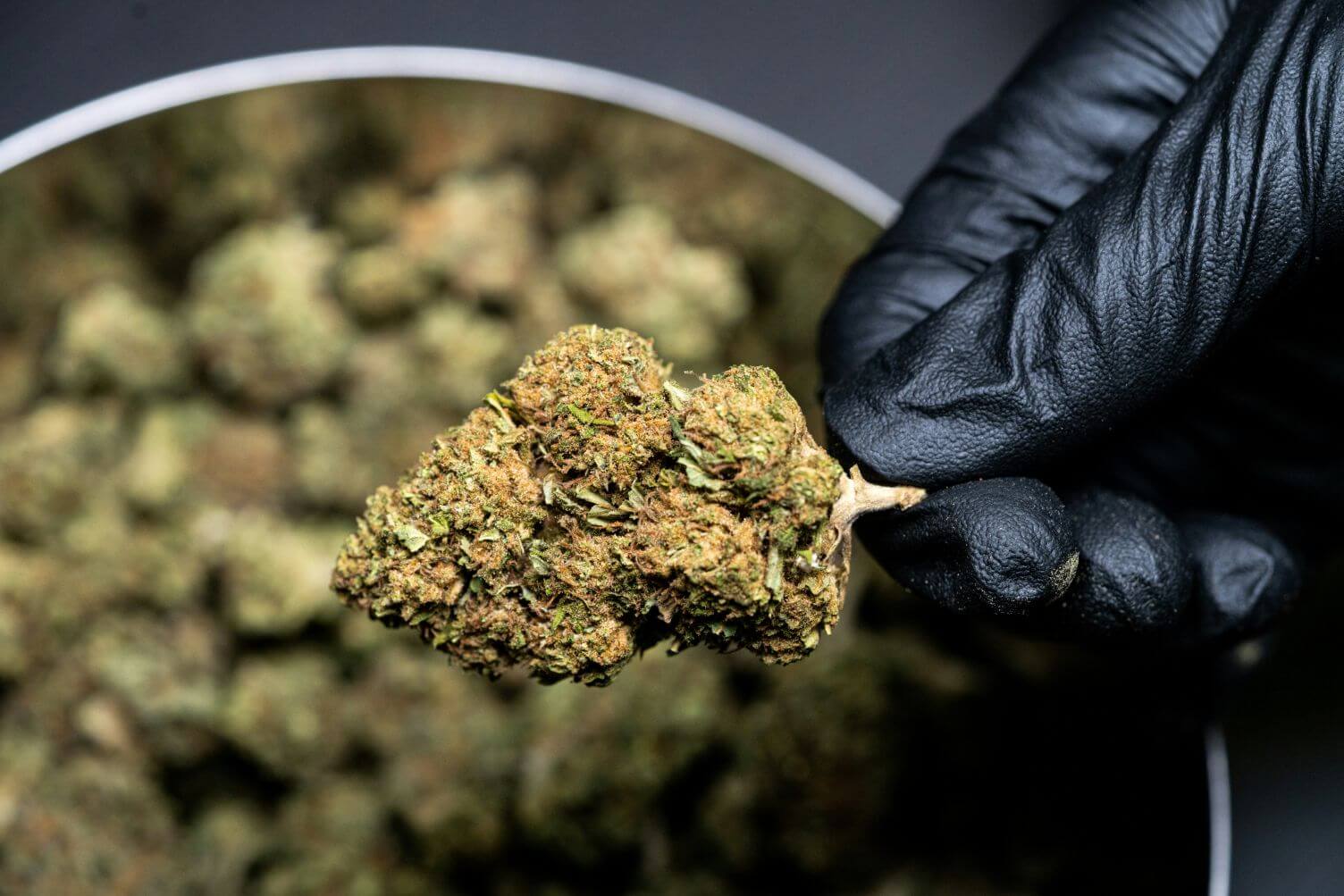
Ask a handful of cultivators what the most stressful phase of the production cycle is, and you’ll get a dozen different answers.
Some will point to the vegetative stage, where a sudden pest outbreak can ruin a canopy before it even starts. Others will argue it’s mid-flower, when a single equipment failure or a spike in humidity can create widespread problems.
But there is a unique, quiet anxiety reserved entirely for the post-harvest phase.
Unlike early-stage cultivation challenges (where you still have time to pivot, treat, or recover), the curing phase represents the final stretch. You have already spent months burning electricity, mixing nutrients, and dedicating labor to perfect your plant’s genetic potential.
In many operations, this critical finish line still relies entirely on manual labor; specifically, the traditional practice of “burping” jars or bins. Relying on human schedules and manual intervention to protect a completed, high-value harvest introduces a massive margin for error.
In modern cultivation where better technology is available, the cost of human error in the curing room is simply too high to ignore.
The Financial Math of a Forgotten Bin
The most immediate risk of manual curing is catastrophic crop loss due to mold, mildew, or anaerobic bacteria like Aspergillus.
When your dried flower is first placed into a curing container, moisture is not uniformly distributed; it continues to migrate from the dense inner core of the bud to the outer surface. If a technician misses a scheduled burp (whether due to a busy shift, a weekend gap, or simple forgetfulness), the relative humidity (RH) inside that container can quickly spike.
Within hours, trapped moisture pockets turn dense colas into localized greenhouses for mold spores.
- The Cost: For a home grower, losing a single pound of premium craft flower represents hundreds of dollars and months of wasted effort. For a commercial cultivator, a single forgotten 10-pound curing bin can instantly wipe out thousands of dollars in wholesale value and ruin batch compliance testing.
The Invisible Loss of Quality
Human error isn’t always as obvious as a moldy batch; often, it is completely invisible until the product is lab-tested or consumed.
Manual burping is inherently disruptive to the plant’s atmospheric equilibrium. When a worker opens a lid to exchange air, they cause a rapid, uncontrolled change in RH, creating inherent inconsistency in the curing process. Because terpenes are highly volatile organic compounds that evaporate easily, this sudden atmospheric shift causes the lightest, most delicate aromas to flash off the plant tissue. What you smell in the air during a manual burp is actually your quality escaping.
Worse yet, if a worker leaves a bin open too long, or burps a room too aggressively on a low-humidity day, the flower risks dropping below 55% RH. Once cannabis drops below this threshold, the vital enzymatic processes required to break down harsh chlorophyll and plant starches stop.
The Scalability Bottleneck
For expanding operations, the cost of human error isn’t just about mistakes… It’s about the compounding cost of the labor itself. Manual curing is incredibly time-consuming and inefficient.
When an operation grows from managing 5 bins to 50 or 100 bins, relying on manual intervention introduces severe logistical friction. Keeping tracking logs on clipboards or spreadsheets leaves an open door for mismatched batches, skipped rotations, and wildly inconsistent product quality across the exact same harvest.
Removing the Human Variable with Precision Automation
True craft quality doesn’t mean doing everything by hand; it means using precision tools to protect hand-crafted quality. Modern agricultural science has long moved away from manual guesswork, relying instead on automated environmental sensors to maintain a flawless atmosphere.
Automated curing technology like Droidcure removes the liability of human error by replacing an unpredictable worker schedule with constant, active monitoring. By embedding ultra-precise Bosch atmospheric sensors directly into the curing environment, Droidcure reads the RH of the flower hundreds of times per hour.
Instead of an abrupt manual air exchange that shocks the plant, automated systems like Droidcure execute small, controlled air exchanges. They release excess moisture only when the internal environment of the container demands it; never too early, never too late.
Protect Your Bottom Line
The post-harvest phase should never be a gamble. By shifting from manual labor to automated environmental control, cultivators protect their cannabis harvest from the unpredictable variables of human error. After months of dedicated work in the grow room, a consistently high-quality cure is exactly what your flower deserves.
Reach out to our team with any questions about Droidcure automated curing. We’re here to help your harvest reach its highest potential.